The Four Words We Stole From the Referee (and Use in Our Living Room)

One night a few years ago, my two kids were arguing over the last slice of pizza with the kind of intensity that made me wonder if we had accidentally booked a title fight in the kitchen. Nobody was hurt. Nobody was even especially right. But the volume was climbing, the little one was backing into the counter, and I could feel myself about to become the loudest person in the room.
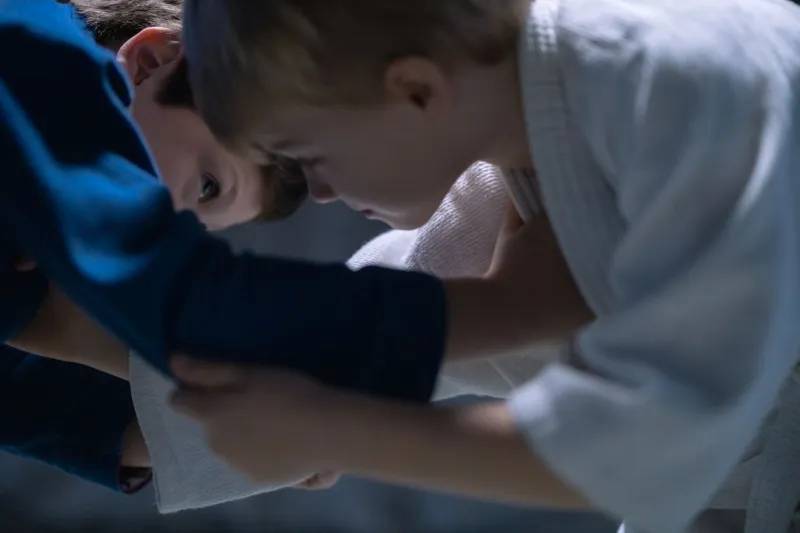
We had been watching a lot of MMA together that season. Not the highlight-reel knockouts—the parts where the referee steps in, uses a few clear words, and gets everyone back to safety. My oldest used to imitate the ref voice for fun. That night, I borrowed it for real.
I said, 'Stop. Feet on the floor. Hands where I can see them.'
It was not magic. But it was clear. Both kids paused. The volume dropped. And for the first time in a while, we had a way into the conversation that did not start with a lecture.
Why Referee Language Works at Home
Referees are trained to manage intense moments with short, direct language. They do not negotiate mid-scramble. They do not ask a fighter to explain their feelings while the action is still happening. They separate, protect, reset, and then let the people involved continue—or not.
That structure is useful at home because sibling conflict often moves faster than a parent’s ability to reason with anyone. By the time you finish saying 'calm down,' somebody is already yelling about whose turn it is. A short command gives everyone a pause button. It is not about turning your kids into fighters. It is about borrowing the discipline of combat sports—safety first, respect always—and using it in the living room.
The Four Words, Translated for the Kitchen Table
We settled on four ref-inspired words. They are simple enough for kids to remember and flexible enough for parents to use without sounding like a robot.
Stop
This one is about immediate safety. It is not a request to explain, defend, or win. It is a signal that the action pauses now.
'Stop. Feet on the floor. Hands where I can see them.'
We use it when voices are rising, when someone is cornered, or when a disagreement is turning physical. The key is to say it once, calmly, and then wait. If a parent repeats it five times, it stops meaning anything.
Reset
Reset is where we take a breath and restart with words. It gives everyone a chance to step back without pretending the conflict did not happen.
'Reset. Take one breath. Then tell me what happened using words.'
This is not a demand to be calm instantly. It is an invitation to try again. Sometimes we need two resets. Sometimes we need a snack and a ten-minute break. That still counts.
Protect
Protect is the most important word in our house. In the cage, the referee protects fighters when they are unable to protect themselves. At home, it means the bigger or louder kid does not get to steamroll the smaller or quieter one.
'Protect. Move back. We keep hands to ourselves, even when we are angry.'
We also use protect to send a younger sibling to the couch or to a parent’s side without making it feel like a punishment. The goal is safety, not shame.
Shake Hands
This one is not about forcing forgiveness. It is about closing the round with respect. In MMA, fighters often touch gloves before and after. They do not have to like each other. They do have to acknowledge that the other person is a human being.
'Shake hands. Not because you agree. Because you are family.'
Sometimes the handshake is reluctant. Sometimes it is followed by a reminder that we will talk about the actual problem after everyone has cooled down. That is fine. Respect can come before resolution.
What This Is Not
This is not a free pass for roughhousing or a way to make sibling conflict sound cooler than it is. We do not let our kids hit each other and call it training. We do not use referee language to avoid consequences or to pretend that yelling did not happen.
The tool only works because the boundaries are real. Hands stay to ourselves. Safety comes first. Adults stay calm enough to model the behavior. If a parent is the one escalating, the whole system falls apart. Trust me on that one.
The MMA Family Test
Combat sports, done well, teach discipline, respect, and control. Those lessons do not have to stay in the gym. A referee’s voice is not a substitute for parenting, but it can be a useful shorthand for a family that already believes in safety and respect.
We still have loud dinners. We still have fights over pizza. But now we have four words that can stop a spiral before it becomes a full-blown main event. Stop. Reset. Protect. Shake hands. It is not a perfect system. It is a family system—and most nights, that is enough.