Brother-and-Sister Grappling: House Rules That Keep Home Rounds Clean
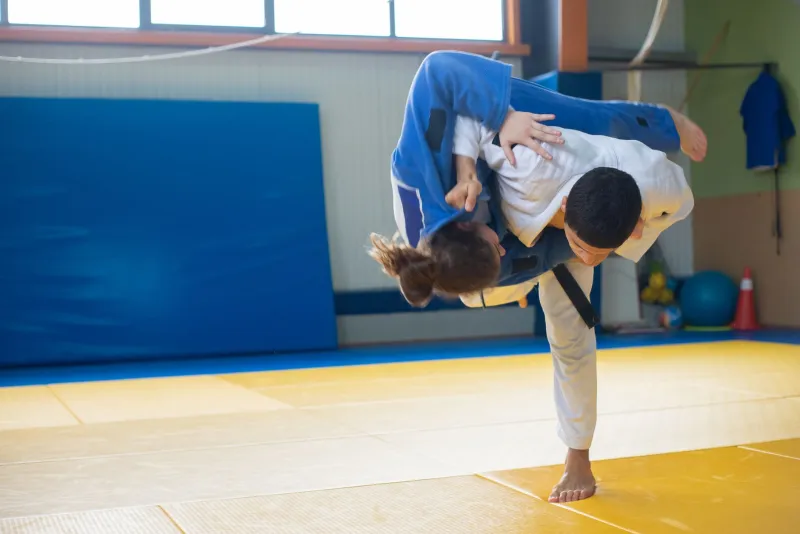
Home grappling between siblings can be one of the best things in a combat-sports family. It’s free, convenient, and built on trust. It can also go sideways in about four seconds.
One minute you’re working a guard pass. The next, someone is cranking a submission, someone is yelling about the score, and a parent is trying to remember whether the living room rule is “no slams” or “no slams after 8 p.m.”
Sibling rounds are worth protecting. They build technique, timing, and trust—if the house rules are clear. Here’s the list we recommend for families whose kids train together.
1. Set the Mat and the Clock Before Anyone Grabs a Gi
Define the space. Define the time. Use a timer. Short rounds—two to three minutes for younger kids, three to four for teens—with a minute reset in between. A visible clock prevents the “one more round” spiral that turns a drill into a grudge match.
2. Pick the Purpose Before the Round
Every round needs a job. Is this a guard-passing round? A takedown-entry round? A top-control round? A movement round? If the purpose is “just see who wins,” you’ve accidentally scheduled a fight.
Say it out loud: “This round is defense only. You’re working frames and escapes.” Purpose keeps the ego in the back seat.
3. Use an Intensity Cap
For sibling rounds, cap live intensity at about 60 to 70 percent. That means controlled speed, controlled power, and no surprise spikes. If one kid starts treating it like a tournament final, pause the round.
The stronger or older sibling carries more responsibility here. They don’t get to “win” home training by overpowering a smaller training partner. Control is the skill.
4. Rotate Roles Every Round
One athlete works top, one works bottom. One attacks, one defends. One calls the drill, one keeps time. One acts as a mini-ref. Rotating roles keeps the rounds from becoming a hierarchy contest and helps both kids understand the other side of the position.
5. Tap Early, Tap Often, and Release Immediately
Verbal taps count. A yelp counts. A freeze word counts. If anyone taps, the other person releases immediately—no “but I almost had it” hold. This is non-negotiable.
6. Keep Score Out of It
No tally on the whiteboard. No “that’s three to one.” No playoff bracket between siblings. The goal is better movement and more trust, not a household ranking. If they want competition, sign them up for a tournament with a referee and a coach.
7. Parent-Coach Boundaries: Pick One Hat
If you’re the parent and the coach, decide which hat you’re wearing. During drills, use your coach voice: short cues, clear corrections, neutral tone. After the round, switch to parent voice: water, food, feelings, and no unsolicited scouting report.
If you can’t switch modes, let another coach handle the technical feedback and keep home rounds simple.
8. Stop the Drill at the First Sign of a Grudge
Watch for the tells: extra torque on a submission, a shove after the tap, trash talk that lands too hard, or the “one more” that comes with clenched teeth. That’s not a teaching moment. That’s a warning light.
Use a script: “Pause. Reset. We’re done with live rounds.” Then separate them for a few minutes. You can always come back tomorrow. You can’t undo a stupid injury.
9. Give Every Kid a Safety Veto
Any sibling can call “safety” at any time, and the round stops with no argument. That rule protects the smaller, younger, or newer kid. It also teaches the older kid that being a good training partner matters more than looking tough.
10. Debrief Away From the Mat
After the round, ask two questions: “What worked?” and “What felt safe?” Keep it short. If they want to troubleshoot technique, do it after water and a few minutes of space. A sibling round should end with a handshake and a shared task—putting away the mats, filling water bottles, or picking the next drill.
The Bottom Line
Sibling sparring is not about turning your kids into rivals. It’s about giving them a safe place to practice being controlled, coachable, and trustworthy. The house rules exist so the relationship stays bigger than the round.
Train together. Grow stronger. Stay family.