Three Generations, One Mat: Making MMA Drills Work for Kids, Parents, and Grandparents
The first time my mother-in-law asked to try the heavy bag, my son immediately wanted to show her a combination. That is the exact moment most three-generation training sessions go sideways. Not from bad intentions — from an unspoken mismatch. Everyone in the room is doing the same drill at the same pace, and only one person's body is built for it.
The fix is not to water the whole session down until the kids get bored. The fix is to scale each movement honestly, station by station, so a nine-year-old and a seventy-year-old can share a mat and both walk away feeling like they trained.
Here is how we run it at home.
Set the Room Before You Set the Timer
Ten minutes of setup prevents an hour of interruptions.
- Clear the floor completely. No coffee table corners, no cords, no dog toys. If you cannot see the whole floor from the doorway, keep clearing.
- Mat what you can. Puzzle mats are cheap and ugly and worth every dollar. At minimum, mat the landing zone around the bag.
- Check with a physician for anyone over sixty or anyone with joint, heart, or balance issues. Not a legal disclaimer — a genuine prerequisite.
- Wraps on, shoes off, water bottles filled. Keep a roll of athletic tape handy for loose wraps.
- Agree on one stop word. Ours is simply stop. Anyone says it, everyone freezes, no explanation required in the moment.
Station 1: Footwork That Ages Well
Footwork is the great equalizer. It costs almost nothing in conditioning, it scales endlessly, and everybody needs it.
Kids: ladder-style steps, lateral shuffles, and a simple game — mirror the leader, switch every fifteen seconds. Keep it playful and short.
Parents: the same patterns, but add a level: shuffle, plant, pivot, reset. Ten reps per direction, then switch.
Grandparents: walk the same lines at a deliberate pace, with one hand on a chair back if balance is a concern. Small steps, heel-to-toe, no hopping. If there is any history of falls, keep a wall within arm's reach the entire time.
The real payoff here is a shared cue. When everyone learns that the back foot drives the pivot, a grandparent can coach a kid without ever touching them.
Station 2: Bag Work at Three Heights
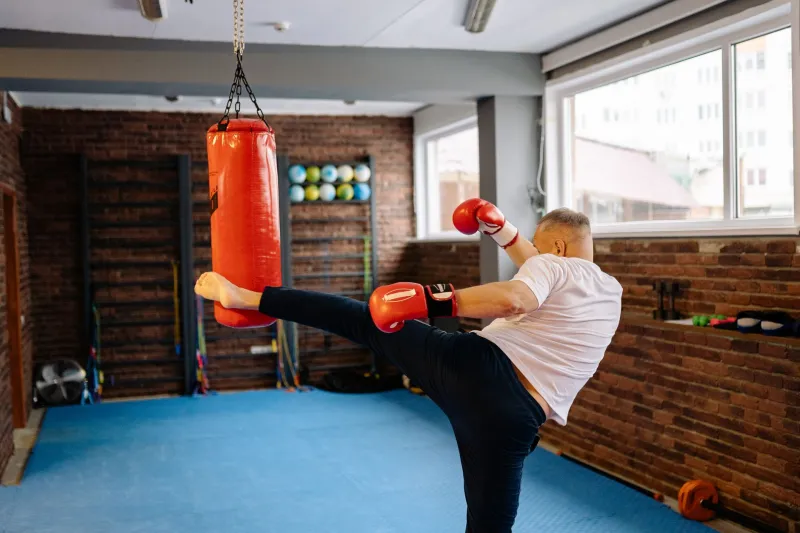
One hanging bag, three versions of the same drill. Set a kitchen timer for six minutes and rotate.
Kids: three-punch combinations at about seventy percent. Emphasize turning the hip and keeping the wrist straight. Kids love volume; cap it, or the last thirty seconds will look like flailing.
Parents: longer combinations with a defensive movement built in — jab, cross, slip, reset. This is where you get your own workout without turning it into a sparring session.
Grandparents: lower the bag if it is adjustable, or use a freestanding bag. Short, controlled straight punches from a stable stance — feet planted, no pivoting off the ball of the foot if balance is a question. Thirty seconds of work, sixty seconds of rest is plenty. Seated bag work is completely legitimate and remarkably good for shoulder mobility.
Rules that do not bend: nobody strikes a person at this station, no kicks above knee height for beginners, and nobody works through wrist pain to prove a point.
Station 3: Balance Drills With a Chair and a Wall
Balance work is where the generations actually train side by side instead of taking turns.
Stand in a loose line. Everyone lifts one foot, holds for a count, switches. Kids get to add a small hop if they want. Parents close their eyes for the last five seconds. Grandparents keep one fingertip on the back of a chair for the first several sessions and only let go when it feels boring.
The point is not competition. The point is that balance is a skill every single person in the room will need more of, not less of, over the next twenty years.
Station 4: Light Grappling Games (No Takedowns, Ever)
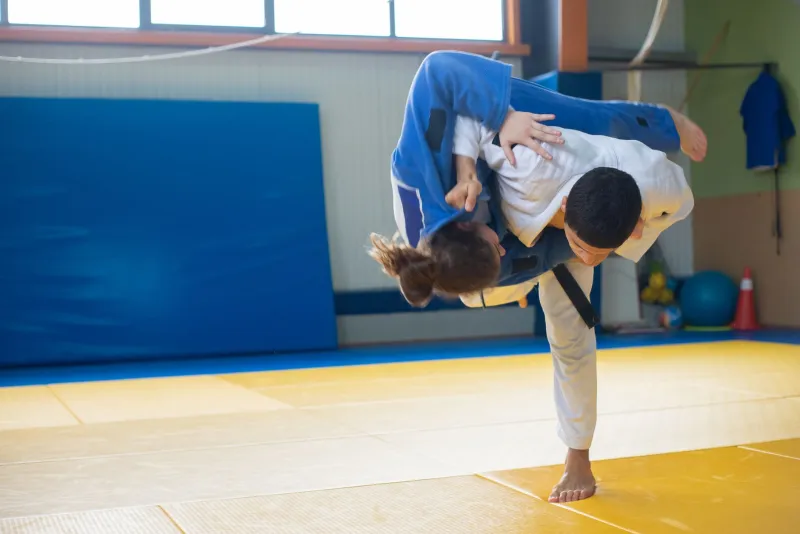
This is where judgment matters most. Cross-generation wrestling is not a family activity — it is a physics problem with an injury at the end. So we split it.
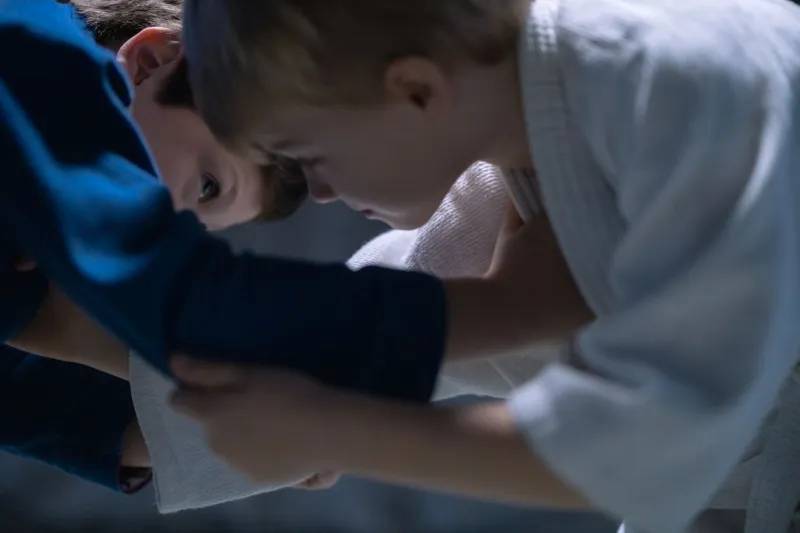
- Kids versus parents: shoulder tag on the knees, seated guard passing with a parent working at maybe forty percent, or a simple grip-break game with a towel. Keep rounds to sixty seconds.
- Kids versus kids: the same games, matched by size, with an adult watching every second.
- Grandparents: grip drills and hand-fighting for position from a standing base, with no lifting, no pulling off balance, and no falling. Or they referee. Honestly, a grandparent refereeing a round of shoulder tag is the best use of the whole afternoon — they get to be the authority, the kids get an audience, and everyone stays upright.
Scaling the Clock
One shared timer, three different ratios:
| Group | Work | Rest |
|---|---|---|
| Kids | 45 sec | 30 sec |
| Parents | 60 sec | 30 sec |
| Grandparents | 30 sec | 60 sec |
Run four rounds per station, then rotate. That is a twenty-four minute session with warm-up and cooldown on either end — short enough that everybody finishes with something left in the tank, which is exactly how family training should end.
What Family Training Actually Buys You
Kids learn that fitness is not a phase you age out of. Parents learn that a hard session can be shared instead of scheduled around. Grandparents get a real reason to work on balance, grip, and shoulder health that has nothing to do with a doctor's lecture.
And everyone gets the thing that keeps a household together through competition seasons and losing streaks and growth spurts: a room where they are all on the same mat, doing the same thing, at a pace that respects them. Train together. Grow stronger. Stay family.